When Eliud Kipchoge crossed the finish line in Vienna in 2019, completing a marathon in under two hours, the world focused on his endurance, discipline, and pacing. But beneath his feet—literally—was a technological marvel that raised as many eyebrows as his time: a shoe so light it could float on water, lighter than a bar of soap, yet engineered to propel human performance beyond its perceived limits.
That shoe, and others like it, didn’t just support a historic feat. They redefined the outer edges of what’s possible in elite distance running.
These aren’t ordinary trainers. They’re precision instruments, built with space-age materials, aerodynamic profiles, and biomechanical intelligence. And they’re at the center of an escalating debate: how much of a record is human, and how much is hardware?
The Rise of the Featherweight Racer
Before the mid-2010s, elite marathoners wore lightweight but conventional shoes—minimal cushioning, simple midsoles, little energy return. A typical racing flat weighed around 7 to 8 ounces (200–225g). Then came the game-changer: a shoe that combined ultralight construction with unprecedented energy efficiency.
Enter the super shoes—a new class of performance footwear designed to reduce energy loss, enhance propulsion, and cut down split times over 26.2 miles. The breakthrough wasn’t just in weight, but in integration: carbon fiber plates, compressible foams, and a geometry tuned for forward momentum.
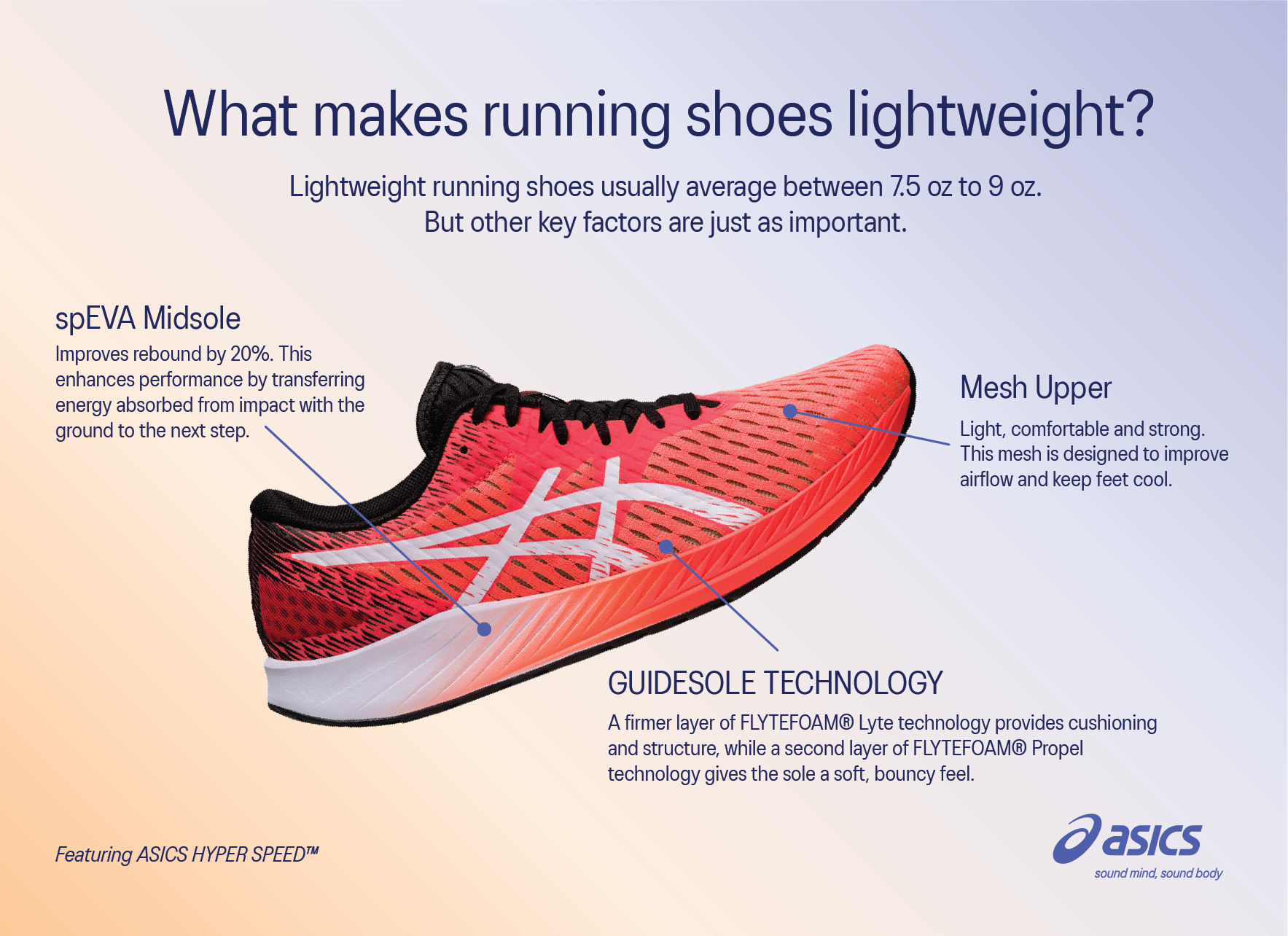
The latest iterations now weigh under 6 ounces (170g) for men’s size 9—comparable to a standard bar of soap. Yet, they deliver more bounce, stability, and responsiveness than any training shoe on the market.
Key example: The Nike ZoomX Vaporfly Next% series, worn in multiple world record attempts, averages 6.2 ounces (176g) in size 10. The Adidas Adizero Adios Pro 3, a direct competitor, clocks in at 6.1 ounces (173g). Both are classified as racing shoes, not training tools—and their impact is measurable.
Why “Lighter Than a Bar of Soap” Matters
At first glance, saving a few ounces per shoe seems trivial. But in endurance sports, marginal gains compound.
Over 42 kilometers, every gram translates into metabolic cost. Research from the Journal of Applied Physiology suggests that reducing shoe weight by 100 grams can improve running economy by up to 1%. That may sound small—until you calculate the time savings over a marathon.
For an elite runner averaging 4:30 per kilometer, a 1% gain equals nearly a minute and a half over the full distance. When world records are broken by seconds, not minutes, that’s transformative.
But weight isn’t the only factor. These shoes integrate three core innovations:
- Ultra-Resilient Foam (e.g., ZoomX, Peba): Offers 85% energy return—far above traditional EVA foam’s 60%.
- Carbon Fiber Plate: Acts as a lever, reducing calf strain and increasing stride efficiency.
- Curved Geometry: Promotes a rolling motion that mimics barefoot running while protecting joints.
Together, they create a “propulsive effect” that feels like being gently pushed forward with each step.
Runners wearing these shoes report less fatigue at mile 20. Analysts note faster negative splits in record-breaking performances. And critics? They question whether we’re witnessing human evolution—or equipment inflation.
How These Shoes Changed Marathon History

Look at the timeline of men’s marathon records over the past decade:
- 2014: Dennis Kimetto – 2:02:57 (wore standard Adidas racing flat)
- 2018: Eliud Kipchoge – 2:01:39 (wore prototype Vaporfly)
- 2022: Kipchoge again – 2:01:09 (Vaporfly Next% 2)
- 2023: Kelvin Kiptum – 2:00:35 (Vaporfly Next% 3)
Each drop of 20–30 seconds coincided with shoe upgrades. While training, nutrition, and pacing improved, the technological leap stands out.
Women’s racing saw the same trend. Brigid Kosgei broke Paula Radcliffe’s 16-year-old record in 2019 with a 2:14:04—wearing the Nike Alphafly, the most advanced version of the line, weighing just 6.4 ounces.
Track analysts at RunRepeat studied over 400,000 race results and found that runners wearing carbon-plated shoes were 3.1% faster on average than those in traditional models. At the elite level, that’s the difference between a top-10 finish and a podium.
The Science Behind the Soles
What makes these shoes so efficient? It’s not magic—it’s biomechanics.
When your foot strikes the ground, energy dissipates in heat, vibration, and muscle stabilization. Traditional shoes absorb much of that energy, forcing runners to work harder to maintain pace.
The new generation of racers flips that model:
- ZoomX foam compresses and rebounds rapidly, returning energy directly to the stride.
- The carbon plate reduces ankle joint torque, lowering calf muscle activation.
- The thick-but-light midsole increases “dwell time” (foot-ground contact) without increasing effort.
A study published in Sports Medicine in 2021 found that runners using super shoes reduced oxygen consumption by 4% at marathon pace—equivalent to being 5–7% more efficient.
That’s like getting a free gear shift every mile.
Yet, these gains come with trade-offs:
- Durability: Most are rated for 100–150 miles. Kipchoge reportedly goes through a new pair every 8 days during peak training.
- Stability: The high stack height and curve increase reliance on strong ankles. Overuse injuries can spike without proper adaptation.
- Cost: Priced between $250–$275, they’re inaccessible to many amateur runners.
Still, their presence at the starting line of every major marathon is now the norm—not the exception.
Are These Shoes Fair?
The debate over performance-enhancing technology isn’t new. Swimming banned full-body suits in 2010 after records tumbled. Cycling enforces strict equipment regulations.
But in running, World Athletics has taken a cautious approach. In 2020, it set limits:
- Maximum sole thickness: 40mm
- One carbon plate allowed (no springs or motors)
- Shoes must be available to the public for at least four months before competition
These rules effectively endorsed super shoes—so long as they’re commercially accessible.
Still, ethical questions persist. Can a $275 shoe create an uneven playing field? Should all elite runners have access to sponsorships that provide free gear? And what happens when the next innovation—a spring-loaded sole, an AI-tuned fit—blurs the line further?
Some argue the shoes merely level the playing field: if everyone has access, it’s still a race of human ability. Others call for “shoe parity” rules in major races, mandating uniform equipment.
For now, the status quo holds. And records keep falling.
Real-World Use: From Elites to Enthusiasts
You don’t have to be aiming for 2:01 to benefit from these shoes. Recreational runners have reported PRs in half-marathons and 10Ks while wearing versions of the Vaporfly or Adios Pro.
But using them effectively requires strategy:
- Don’t train daily in them. Their design favors race-day explosiveness, not long-term durability.
- Break them in gradually. Wearing them for your first marathon without testing can lead to blisters or strain.
- Pair them with strength work. The carbon plate reduces calf load, but weak glutes or hips can offset gains.
One amateur runner in Boston shaved 7 minutes off her PR after switching to the Saucony Endorphin Pro 3. “It felt like the shoes were doing half the work,” she said. But she also added weekly plyometrics to adapt to the responsive ride.
Coaches now treat super shoes like race-day weapons—reserved for tempo runs, intervals, and competitions.
The Future of Footwear Innovation
What’s next? Shoe manufacturers are already testing prototypes with dual plates, adaptive foams, and even embedded sensors.
Nike’s Alphafly 2 includes small “trampoline” pods in the forefoot—designed to add extra pop during toe-off. Adidas is experimenting with bio-based Peba foam to reduce environmental impact without sacrificing bounce.
Meanwhile, New Balance and Hoka are narrowing the gap, releasing models like the FuelCell RC Elite and the Carbon X series that rival the big names in weight and performance.
The race isn’t just on the track—it’s in the lab.
But amid the innovation, one principle remains: no shoe can replace training, grit, or race-day execution. Kipchoge didn’t break two hours because of his footwear. He did it because he trained like a machine, paced like a metronome, and believed like a visionary.
The shoes simply removed friction from the equation.
Closing: Step Lighter, Run Smarter
The next time you see a marathon record shattered, look beyond the clock. Look at the feet. Chances are, they’re clad in something featherlight, space-aged, and engineered to the edge of possibility.
These shoes—lighter than a bar of soap—are more than gear. They’re symbols of human ingenuity, pushing the boundary between body and machine.
If you’re serious about performance, consider integrating a pair into your race rotation. But remember: technology amplifies potential. It doesn’t create it.
Train hard. Race smart. And let your feet carry you—not just the foam beneath them.
FAQ
What does “lighter than a bar of soap” mean in running shoes? It refers to elite racing shoes weighing under 6 ounces (170g), similar to a standard bar of soap, reducing energy cost over long distances.
Which marathon records were set with these lightweight shoes? Eliud Kipchoge’s 2:01:39 (2018), 2:01:09 (2022), and Kelvin Kiptum’s 2:00:35 (2023) were all achieved wearing Nike’s Vaporfly/Alphafly series.
Are carbon-plated shoes allowed in competition? Yes. World Athletics permits them as long as they meet sole thickness (≤40mm) and public availability rules.
Can amateur runners benefit from super shoes? Yes. Many recreational runners report improved times and reduced fatigue in races when using carbon-plated, lightweight models.
Why are these shoes so expensive? Advanced materials (ZoomX foam, carbon plates), R&D costs, and limited durability contribute to prices ranging from $250–$275.
Do lightweight racing shoes cause injuries? They can if used improperly. Their high stack and stiffness require strong supporting muscles. Gradual adaptation is key.
How long do super shoes last? Most last 100–150 miles. Elite runners often replace them every few weeks during heavy training.
FAQ
What should you look for in Lighter Than a Bar of Soap: The Shoes Behind Marathon Records? Focus on relevance, practical value, and how well the solution matches real user intent.
Is Lighter Than a Bar of Soap: The Shoes Behind Marathon Records suitable for beginners? That depends on the workflow, but a clear step-by-step approach usually makes it easier to start.
How do you compare options around Lighter Than a Bar of Soap: The Shoes Behind Marathon Records? Compare features, trust signals, limitations, pricing, and ease of implementation.
What mistakes should you avoid? Avoid generic choices, weak validation, and decisions based only on marketing claims.
What is the next best step? Shortlist the most relevant options, validate them quickly, and refine from real-world results.