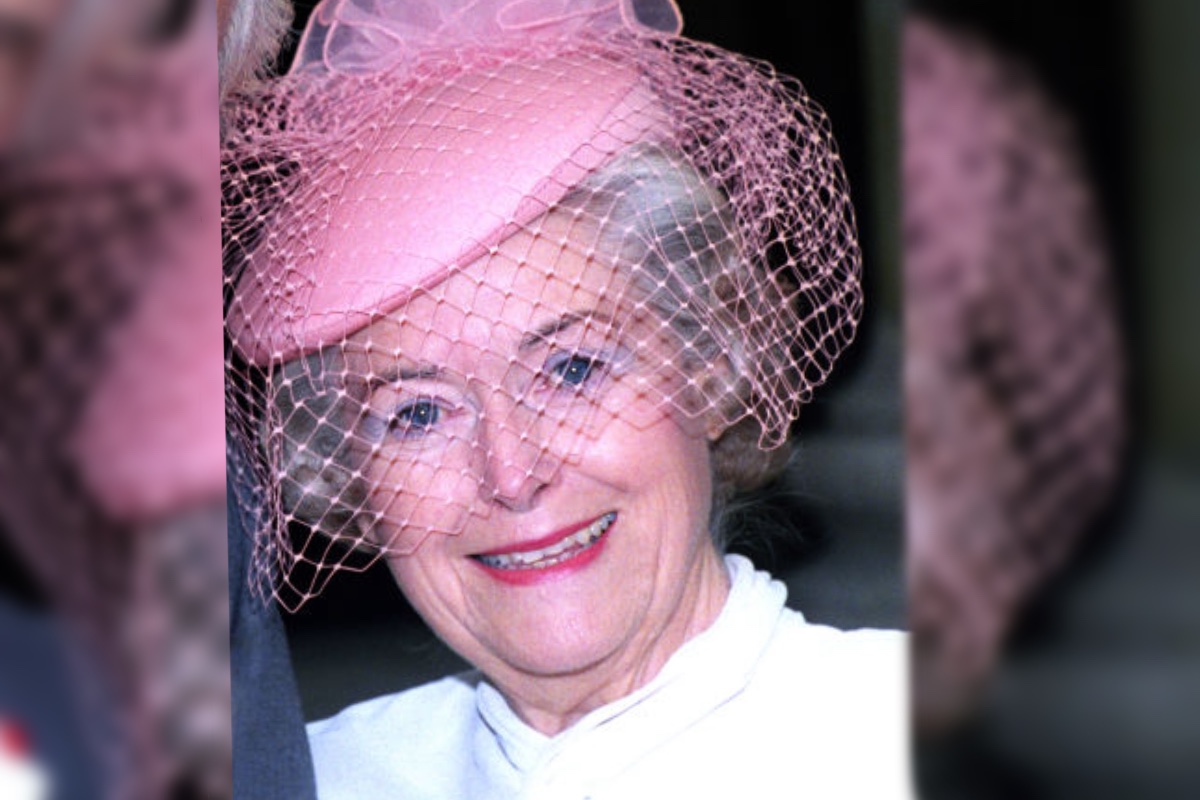
The Australian entertainment world has lost one of its most enduring and beloved figures. Patricia Crocker, renowned for her role in the groundbreaking Channel Ten series Number 96, has passed away at the remarkable age of 105. Her death marks the end of an era for Australian television, closing a chapter on a career that helped redefine the scope of drama on local screens during the 1970s.
Crocker’s portrayal of Edie McDonald, the sharp-tongued yet warm-hearted laundrette owner, resonated with audiences across the nation. Her character was more than comic relief—she was a moral anchor in a series known for pushing boundaries with taboo topics like sexuality, drug use, and identity. At a time when Australian television played it safe, Number 96 stood out, and Crocker stood at its heart.
A Groundbreaking Role in a Groundbreaking Series
Number 96, which aired from 1972 to 1977, was unlike anything Australian audiences had seen. Set in a Sydney apartment block, the show blended soap opera tropes with bold social commentary. It was the first Australian series to feature full nudity, tackle homosexuality openly, and explore domestic violence—all while maintaining a core of character-driven storytelling.
Patricia Crocker’s Edie McDonald became an unexpected fan favorite. A widow with a no-nonsense attitude and a soft spot for her neighbors, Edie often served as the show’s conscience. Clad in floral housecoats and wielding a steaming iron, she offered wisdom, sarcasm, and, occasionally, a well-timed slap of reality.
What made Edie compelling was her authenticity. Unlike many characters of the era, she wasn’t chasing romance or reinvention—she was simply living her life with dignity, humor, and resilience. In a show filled with dramatic plot twists, Edie grounded the narrative with relatable humanity.
Crocker’s performance stood out not just for its consistency but for its quiet strength. While other characters faced kidnappings, explosions, and secret twins, Edie dealt with rent increases, nosy neighbors, and the loneliness of aging—all of which resonated deeply with older viewers who rarely saw their experiences reflected on screen.
From Stage to Screen: The Early Career of Patricia Crocker
Before Number 96, Crocker was already a seasoned performer. Born in 1919 in Melbourne, she began her career in radio during the 1940s, a golden era for Australian broadcasting. Her voice—warm, crisp, and expressive—made her a natural fit for radio dramas, where she played everything from society matrons to scheming spinsters.
She transitioned to television in the 1950s, appearing in early Australian productions like The Mavis Bramston Show and Homicide. These roles were often fleeting, but they showcased her versatility. Directors noted her ability to command attention without overshadowing others—a rare balance in ensemble casts.
Her casting in Number 96 came late in her career, at age 53. At the time, it was unusual for women over 50 to land recurring roles on prime-time television, especially ones not defined by illness or dependence. But Crocker proved that maturity could be magnetic. She brought credibility to the role and, in doing so, challenged ageist norms in casting.
The Cultural Impact of Number 96 and Its Cast
Number 96 didn’t just break taboos—it shattered them. The show attracted massive ratings, peaking at over 80% of the viewing audience in major cities. It was appointment television, discussed at workplaces and schoolyards alike. Much of its success lay in its ensemble cast, which included trailblazing actors like Carlotta, the transgender performer who played Felicia Cox, and Johnny Lockwood, who played openly gay character Don Finlayson.
Patricia Crocker was central to the show’s emotional balance. While others represented the show’s progressive edge, she represented continuity and tradition. This duality—between change and stability—was key to Number 96’s longevity.
Off-screen, Crocker was known for her professionalism and kindness. Co-stars recall her bringing homemade biscuits to the set and mentoring younger actors. “She treated everyone with respect, whether you were the lead or the tea lady,” said Wendy Hughes, who guest-starred in two episodes. “She made the set feel like home.”
Her humility extended to how she viewed her fame. Despite becoming a household name, she never embraced celebrity culture. She lived quietly in a Melbourne suburb, avoided interviews, and declined most public appearances after the show ended.
Life After Number 96: A Quiet Legacy
When Number 96 ended in 1977, so did Crocker’s regular screen appearances. Unlike some cast members who pursued film or theater, she chose to step away. She made only a few guest appearances in the 1980s, including a memorable role on The Sullivans, before retiring completely.
But her absence from the spotlight didn’t diminish her influence. Over the decades, Number 96 gained cult status, with DVD releases and streaming bringing it to new generations. Edie McDonald became a symbol of the show’s emotional core—proof that groundbreaking television could also be deeply human.
In 2015, the National Film and Sound Archive restored the series, preserving over 300 episodes. In the accompanying commentary, archivists singled out Crocker’s performance as “deceptively simple, profoundly effective.” They noted how her gestures—the way she adjusted her glasses before delivering a zinger, or the slight slump in her shoulders when delivering bad news—added layers to her character.
Why Patricia Crocker Matters in Australian TV History

Crocker’s legacy extends beyond ratings or awards. She represents a shift in how older women are portrayed on screen. At a time when television often sidelined women over 50, she held a central role in one of the country’s most talked-about series. She proved that age brings depth, not decline.
Moreover, her work challenged the idea that progress in television had to come at the expense of emotional authenticity. While Number 96 pushed boundaries with its content, it was characters like Edie that gave the show heart. Crocker’s performance reminded audiences that change doesn’t erase tradition—it evolves alongside it.
Today, as the industry continues to grapple with representation, her career offers a quiet lesson: meaningful roles for older women aren’t just possible—they’re essential. Her presence on screen validated the experiences of millions of Australian women who saw themselves in Edie, not despite their age, but because of it.
Tributes and Recognition
Following the announcement of her passing, tributes flooded in from across the entertainment world. Network Ten released a statement calling her “a cornerstone of Australian television” and “a trailblazer for women of her generation.” The Australian Writers’ Guild noted that her character “gave voice to the overlooked—older, working-class women who kept communities together.”
Co-star Abigail, who played the glamorous corner store owner, wrote on social media: “Edie was the soul of Number 96. Patricia played her with such honesty, such warmth. We’ve lost a giant.”
Even international figures acknowledged her impact. British actress Dame Penelope Wilton, known for her roles in Downton Abbey and The Best Exotic Marigold Hotel, said: “Characters like Edie McDonald are rare. They stay with you. Patricia Crocker gave her life, and we’re all richer for it.”
A Final Note on a Life Well-Lived
Patricia Crocker’s life spanned over a century of change—two world wars, the rise of television, the digital revolution. Through it all, she remained grounded, focused on craft rather than fame. She never won a Logie, never appeared on reality TV, never sought the limelight. And yet, her influence is undeniable.
She leaves behind no children, but her family includes generations of viewers who laughed at her one-liners, nodded at her wisdom, and felt seen through her character. In a world obsessed with youth and virality, her career stands as a testament to the power of quiet excellence.
For those discovering Number 96 for the first time, her performances remain accessible—available through archives and streaming platforms. For long-time fans, her passing is a moment to reflect on how far Australian television has come, and how much of that progress was paved by performers like her.
If there’s one lesson from Patricia Crocker’s life, it’s this: authenticity outlasts spectacle. Talent outlasts trends. And a single role, played with truth, can echo for generations.
Frequently Asked Questions
Who was Patricia Crocker? Patricia Crocker was an Australian actress best known for her role as Edie McDonald in the 1970s television series Number 96. She passed away at the age of 105.
What was Patricia Crocker’s role in Number 96? She played Edie McDonald, the laundrette owner known for her sharp wit, moral compass, and grounded presence in the series.
When did Patricia Crocker die? She passed away in 2024 at the age of 105. The exact date has not been publicly disclosed by her family.
Was Patricia Crocker married or did she have children? She never married and had no children. She lived a private life in Melbourne after retiring from acting.
Why was Number 96 significant in Australian TV history? Number 96 was groundbreaking for its time, tackling social issues like homosexuality, abortion, and racism—topics rarely addressed on television in the 1970s.
Where can I watch Number 96 today? The series has been restored by the National Film and Sound Archive and is available through select streaming platforms and DVD collections.
Did Patricia Crocker win any awards for her work? While she was never awarded a Logie, she received widespread critical acclaim and is remembered as a pioneering figure in Australian television.
FAQ
What should you look for in Beloved Australian Actress from Number 96 Passes at 105? Focus on relevance, practical value, and how well the solution matches real user intent.
Is Beloved Australian Actress from Number 96 Passes at 105 suitable for beginners? That depends on the workflow, but a clear step-by-step approach usually makes it easier to start.
How do you compare options around Beloved Australian Actress from Number 96 Passes at 105? Compare features, trust signals, limitations, pricing, and ease of implementation.
What mistakes should you avoid? Avoid generic choices, weak validation, and decisions based only on marketing claims.
What is the next best step? Shortlist the most relevant options, validate them quickly, and refine from real-world results.